Gallery
The heritage, elegance and diversity of the kebaya.
From the Peranakan shophouses of Singapore to the regional courts of Indonesia.
About the gallery
The illustrations in this gallery have been created for Kebaya Oslo to celebrate and showcase the rich heritage, elegance, and diversity of kebaya traditions across Southeast Asia. They are inspired by traditional styles and are intended to promote cultural appreciation and awareness.
Singapore
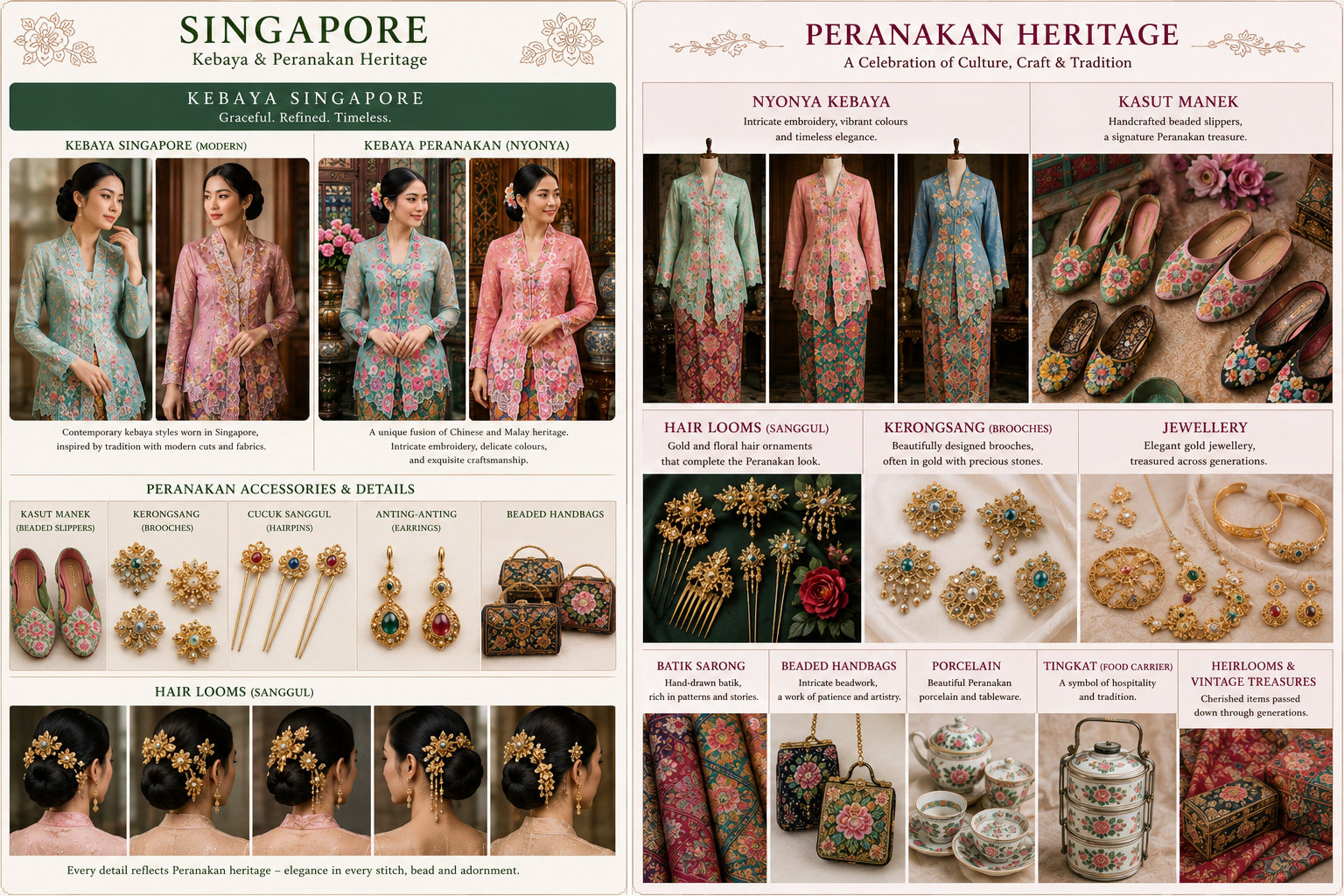
The Elegance of Kebaya in Singapore and Peranakan Heritage
Singapore’s kebaya reflects the country’s rich multicultural heritage, particularly the Peranakan (Straits Chinese) community. Known for its delicate embroidery, vibrant colours and exquisite accessories, the Singapore kebaya remains a timeless symbol of grace, tradition and identity.

Malaysia
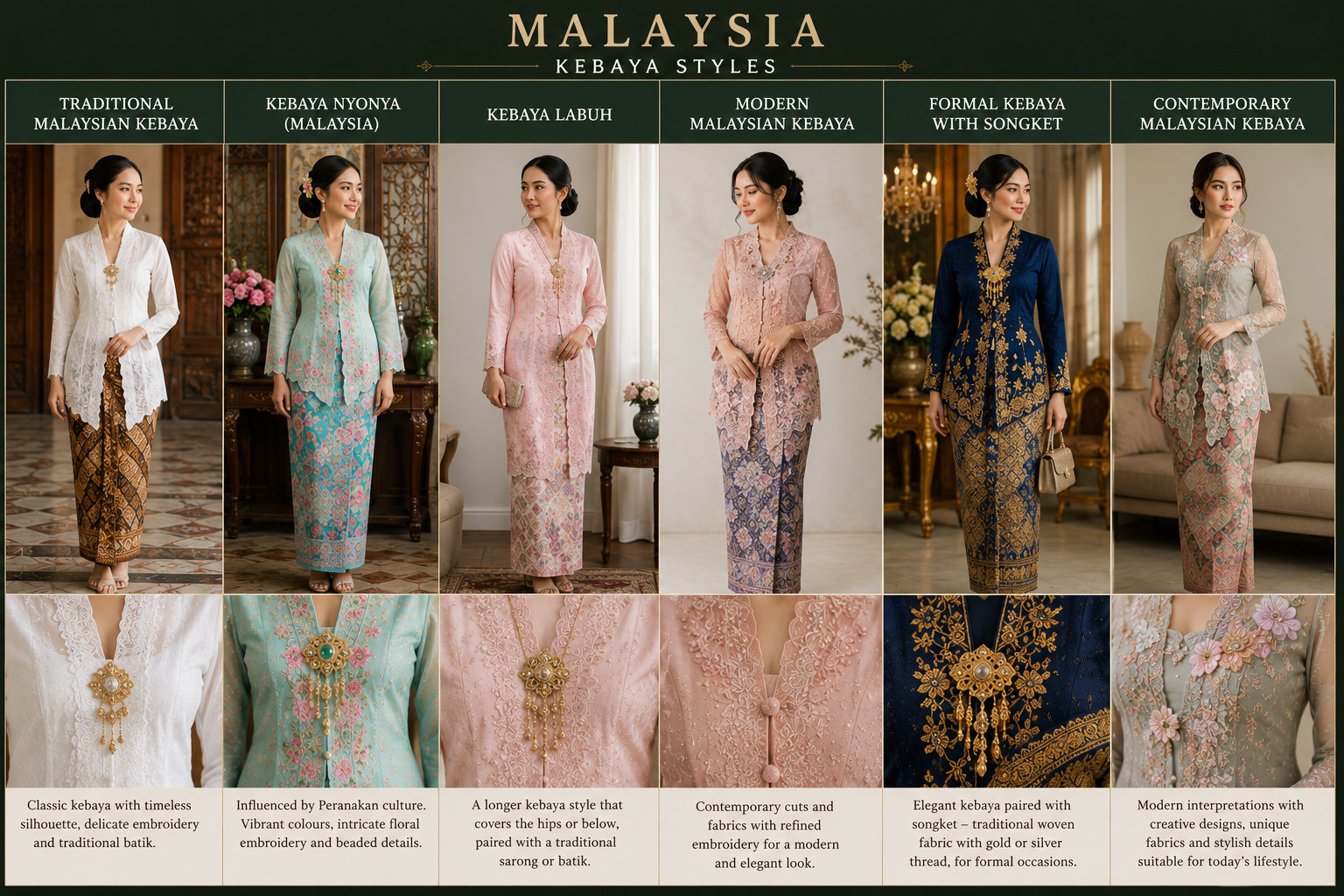
The Beauty of Malaysian Kebaya
Malaysia is home to many beautiful kebaya styles, from the elegant Kebaya Labuh to the colourful Kebaya Nyonya. Each style reflects the country’s diverse cultural heritage and showcases fine craftsmanship through embroidery, batik and songket.

Indonesia
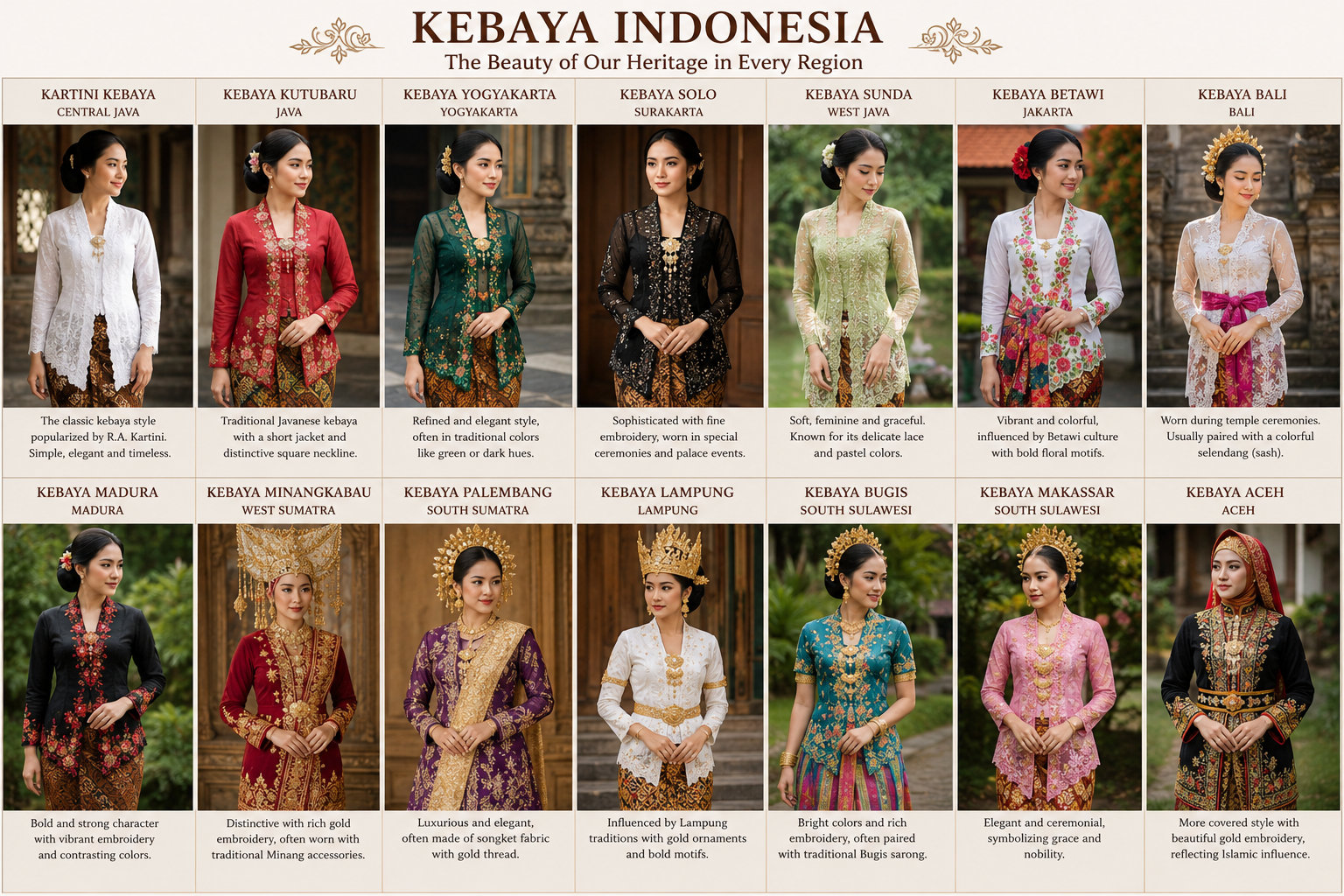
The Diversity of Indonesian Kebaya
Indonesia offers the widest variety of kebaya styles, each representing the traditions of different regions. From the classic Kartini and Kutubaru kebaya of Java to the ceremonial styles of Bali and the unique regional interpretations across the archipelago, every kebaya tells its own story.

The Origins of Kebaya
Many historians believe the kebaya evolved over centuries, with influences from royal courts and cultural exchanges across Southeast Asia. The Majapahit Kingdom (1293–1527), centred in East Java, is widely regarded as an important influence in the development of traditional Javanese dress, which later evolved into many of the kebaya styles we know today.